
TL;DR
Great people end up on struggling teams when staffing, skills, demand and financials sit in silos. I spent 14 years in resourcing roles, so I’ve seen this from every angle. Today I’d like to go over the main areas I addressed in ProFinda’s Connecting the Dots webinar:
- Why rate, headcount and utilization are really margin, skills and the right work.
- The four-step cycle that makes “Team A” happen on purpose: know, match, see ahead, grow.
- Why resource managers are your most underused source of business insights.
- Three questions (and quick tests) to take back to your team.

Picture two project teams. Similar clients, similar work, equally sharp people.
Team A is flying. The client is delighted, the project is on time and the margin is on target. Better still, the team can see how the work connects to the skills they want to build next.
Team B is in survival mode. People are learning on the job, project leaders are reviewing and reworking at 10pm, and hours are quietly eaten to hit deadlines. A few people have already started updating their resumes.
When I asked attendees of our recent webinar, Connecting the Dots, which they see more of, the answer was clear: plenty of Team Bs, and plenty of both. Sound familiar? Here is the twist. Look at either team’s resumes on their own and you would find nothing wrong. The difference is not the talent, but how we bring people together around the work. And that is where resource management comes in.
Everyone Has A Map of Their Own Neighborhood
Staffing, skills, client demand and financial results all affect each other. Yet in most firms I’ve worked with, they live in different teams, tools, spreadsheets and meetings.
So everyone sees their own slice. Project leaders think resource management is too slow. Consultants find their own work because they don’t trust the process. Resource managers hear “utilization, utilization” and little else. HR asks why the skills gap is suddenly an emergency. And business leaders are told the firm is sold out, while finance says revenue is behind.
Sounds like madness? Well, actually they all have a valid point, because they use a detailed paper map of their own neighborhood. What’s missing is the GPS to help them get from one side of town to the other.
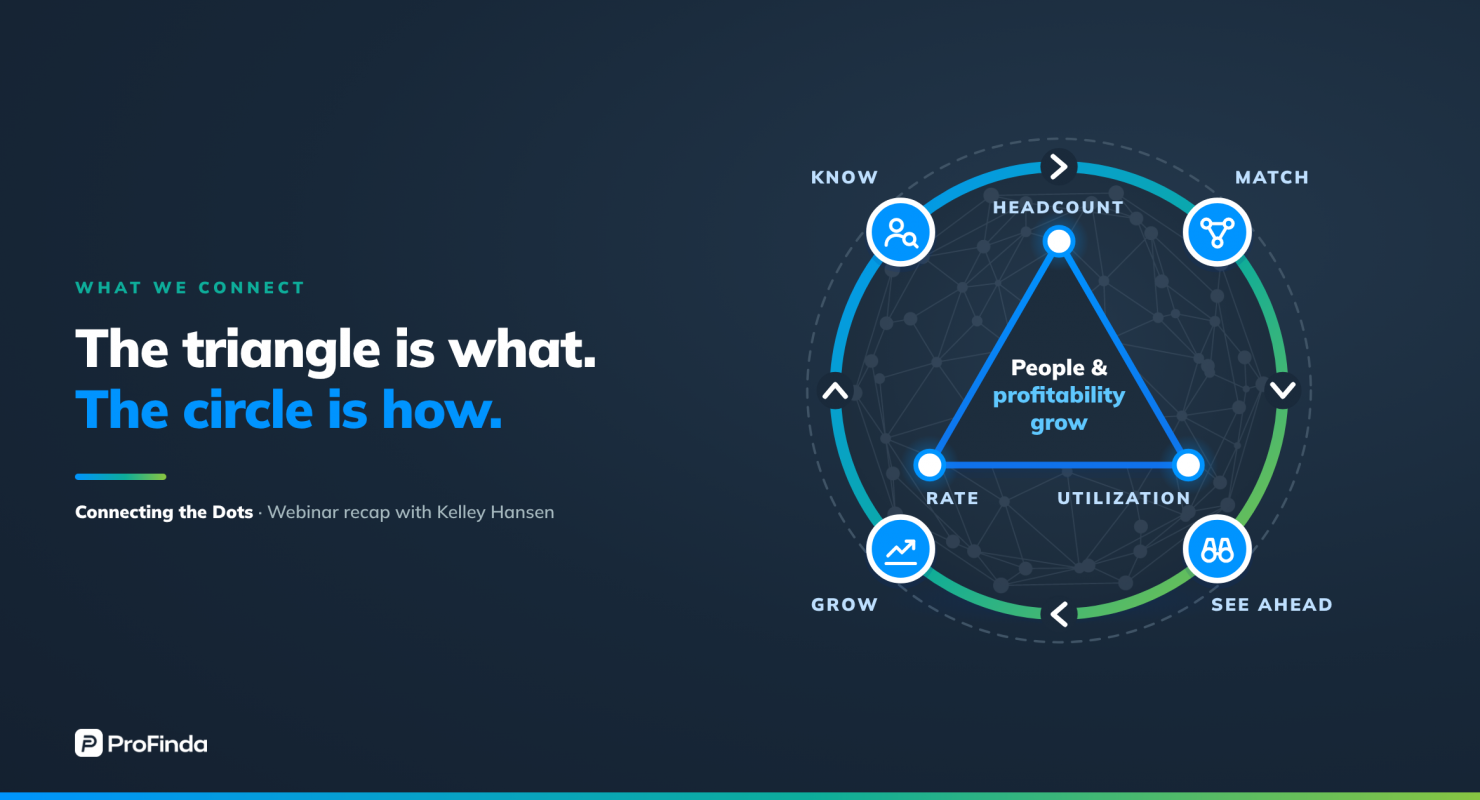
The Triangle: What We Need To Connect
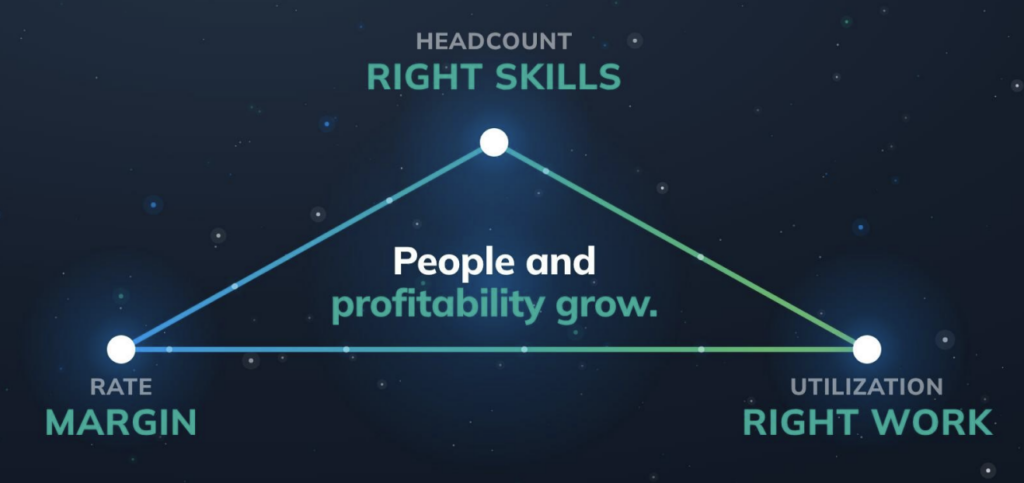
Professional services firms have always made money on three levers: rate, headcount and utilization. In plain English: who does the work, how much it costs, and how well we use our people.
These decisions, of course, are all connected. Put one person on one project and you have made a margin decision, a skills decision and a utilization decision, whether you meant to or not.
And AI has raised the stakes. Clients want work done better, faster and cheaper, and they want to pay for outcomes, not hours. So each lever is evolving:
- Rate becomes margin. What matters is profit on the outcome, not the rate card in the SOW.
- Headcount becomes ‘the right skills’. Clients don’t buy titles, but proven experience.
- Utilization becomes ‘the right work’. Busy on the wrong things looks green on a dashboard but isn’t a long-term win.
Get them working together and people and profitability grow together.
The Circle: How We Connect Them
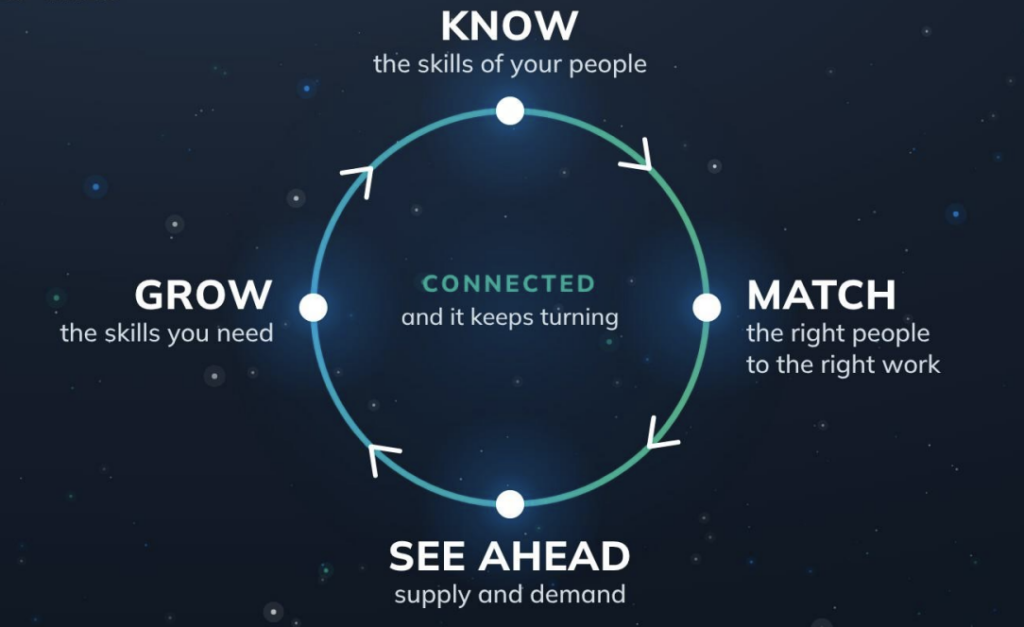
If the triangle is what we connect, the circle is how we do it. It is a four-step cycle, and every round makes the next one better.
- Know your people, with skills built from real work. If a client asks for someone with a specific skill and industry experience, is that a minutes problem, an hours problem or a days-of-emails problem? The answer isn’t cataloging every skill (nobody needs my high school clarinet proficiency!). It’s a demand-led view: what do clients need, and who can do it?
- Match the right people to the right work. This is where margin is won or lost and where employee experience is shaped. The goal isn’t to automate staffing decisions, but to provide humans who will make that decision with a wider view, across employees, contractors, delivery centers and now AI agents.
- See ahead to the skills gap. Move beyond the utilization dashboard that tells you about last month and position people for next quarter and next year. You can’t prepare a workforce for a future you can’t see.
- Grow what you need next: build, buy, borrow or bot. Shift from reacting to gaps to anticipating them, and make deliberate choices about how to close them.
This is how Team A happens more often. Not luck, not the pipeline but on purpose.
The Big Idea: Resource Managers Are Your Dot Connectors
I’ve sat on both sides of the fence, so my experience is first hand. Early in my career, on the delivery side, I wondered how hard resource management could really be. Then I moved into business operations to lead a resource management team. Suddenly I could see every request, every deal in the pipeline and every leader convinced their project was the most urgent.
That experience left me with a firm belief: resource management is one of the most underused sources of business insight in professional services. Not because those teams lack capability, but because they rarely have a seat at the table.
The difference a connected environment makes can be dramatic. One of my colleagues saw her firm mobilize hundreds of people for a critical healthcare initiative at the height of the pandemic. Because skills data was connected, they surfaced healthcare expertise they didn’t know they had and assembled hundreds of bios in record time.
AI agents make this role even more critical. As agents join delivery teams, someone needs to ask: what work should be done by people, by agents, or both? Who owns each agent and is accountable for its output? And if AI removes the bottom rungs of the career ladder, how will tomorrow’s managers build judgment? That last question gets answered one staffing decision at a time, which puts resource managers right at the center of it.
To be clear, this isn’t about technology alone. The cycle needs both process and technology to work.
The Three Questions All Resource Managers Must Ask
Truth is, no one can fix this all at once. Often it starts with asking a different question, or bringing a different person into the room.
For example: on a recent project that went sideways, when was the staffing decision made, and who wasn’t in the room?
- Wrong fit: did the team we staffed match the team we priced? We price the SOW with the ideal team pyramid, then staff with whoever is free. Juniors wing it, or a senior does work two levels down at a much higher cost. That gap is where margin walks out the door, especially as outcome-based pricing grows. Quick test: pull your last three wins. Compare the team you priced with the team you staffed.
- Wrong future: are we building the skills our clients will need, in the people who want to build them? Everyone’s busy, but busy doing what? Skills planning can’t sit with L&D alone; it needs to be shaped by the work you’re winning. Quick test: name the three skills your pipeline needs most next year. Who’s building them?
- One at a time: are we staffing one project at a time, or managing the whole business? Up close, every staffing decision makes sense. Step back and you may find one team stretched while another sits on the bench, or your unicorn skill booked on low-priority work. Put the big rocks in the jar first, then fill in around them. Quick test: pick one recent week. Who was on the bench while another team was stretched?
Better Outcomes Don’t Happen By Accident
This isn’t a choice between business results and people outcomes. When the dots connect, project leaders trust the options they’re given and consultants know why they’re on the work. Resource managers become strategic partners, HR sees gaps coming, and business leaders see pipeline, people and skills in one picture. And it shows up in margin and utilization, not just anecdotes.
Every staffing decision is a chance to connect another dot.
If you’re ready to give your resource managers a seat at the table, or want to see how connecting skills, pipeline and people in one picture could help you staff more Team As, speak to one of our workforce experts. Book some time with our team now and discover how ProFinda helps professional services firms turn every staffing decision into better results for their people and their business.
Watch the full webinar recording and connect with me on LinkedIn to explore how we can help you accelerate your path to better strategic resource management.