
TL;DR
A schedule full of green doesn’t often represent the full picture of who’s actually available. Resource managers still track the real story offline, since scheduling tools only show booked or not booked, missing everything in between. This hidden work costs more than time. It wears down trust in the data, in the staffing decision, and in the resourcing team itself. A shared, real-time view of availability across the whole firm helps staffing move faster and draw from the entire talent pool rather than one person’s spreadsheet.

A schedule full of green
A client request comes in needing people in a couple of weeks. The engagement manager pulls up the schedule, sees a lot of green, and starts building a shortlist in her head. She sends the request to Resource Management, names the people she wants, and figures this one’s an easy solve.
A day passes and she hears nothing. She pings the resource manager for an update. The people she asked for were already proposed on other client work, so the RM is chasing down other options. The engagement manager is a little disappointed, but she gets it. There’s a lot in flight. A couple more days go by. She checks in again, frustrated now, because getting a few people shouldn’t be this hard when so many schedules looked wide open.
So what was really going on?
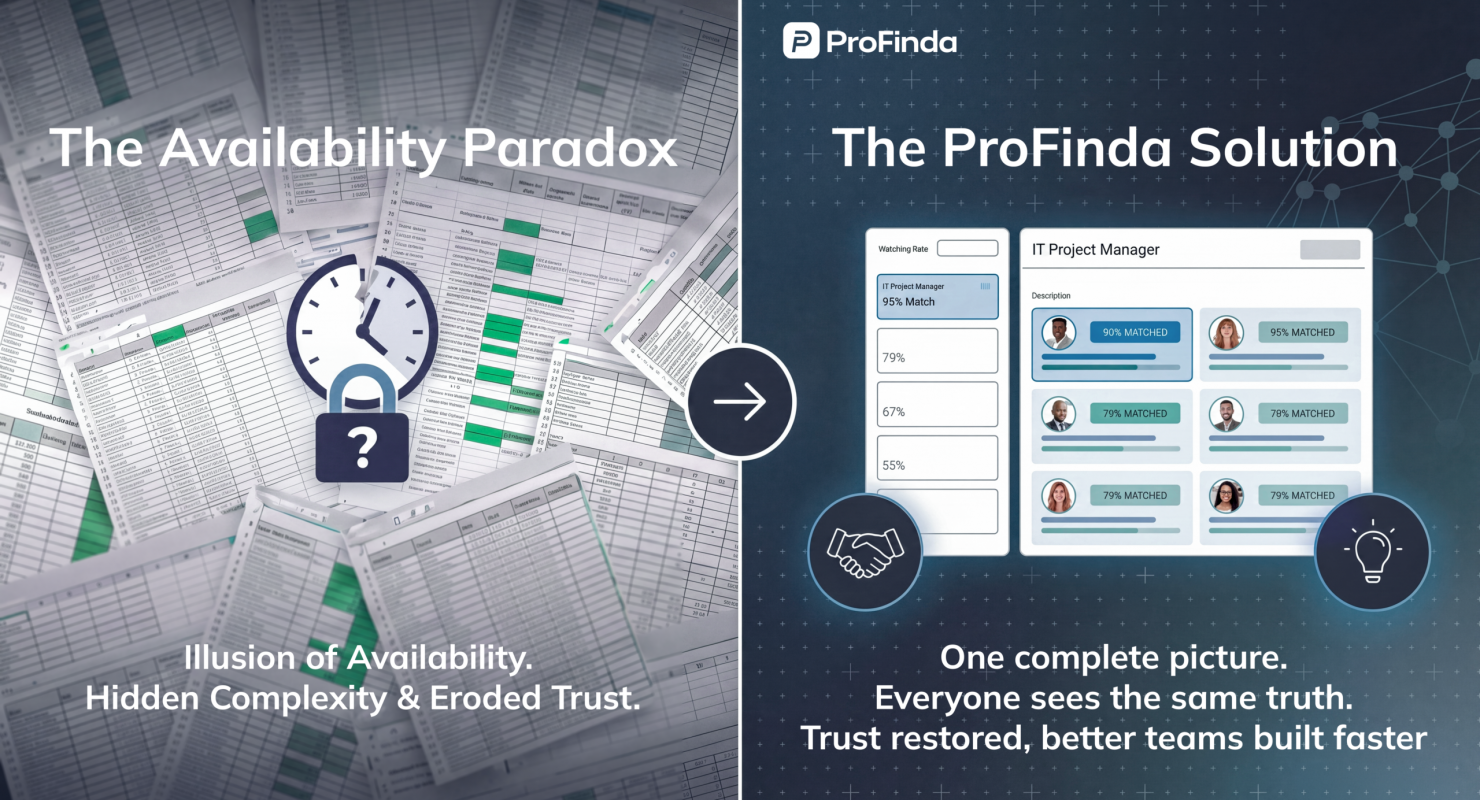
While the engagement manager wondered why progress was so slow, Resource Management was quietly working the need around the team. Every resource manager kept their own offline tracker, noting who was actually free and who had already been proposed to a client. The scheduling tool only captured booked and not booked, with no way to hold the reality in between: probably going here/there, still waiting to hear back from the project team.
The days didn’t disappear into anyone sitting on their hands. They disappeared into confirming availability, one message at a time, before the real staffing decision could even start.
The real cost isn't just time. It's trust.
Chasing availability wears on resource managers and project leaders alike, and it’s a poor use of everyone’s time. But time isn’t the most expensive thing we lose. Trust is.
When green in the scheduling tool turns out to mean nothing, we stop trusting the data. When a simple request takes three days and three follow-ups, project leaders stop trusting the Resource Management team and quietly conclude the staffing process is broken.
In reality, everyone was doing their best with very little visibility. The technology didn’t enable collaboration or show the whole picture, so we got slow answers and quiet doubt that we’d even landed on the right staffing decision, having weighed one slice of people at a time, spreadsheet by spreadsheet.
What if everyone could just see it?
Relief. That’s what I felt the first time I saw ProFinda, after too many conversations explaining why green on the schedule didn’t mean real options for someone’s client. Here, finally, was one place for the entire staffing lifecycle to live, where everyone works from the same complete picture instead of a stack of disconnected spreadsheets.
When everyone can see it, trust comes back on all three fronts at once. Open means open again, so we trust the data. We’re staffing from the whole firm instead of one person’s talent pool, so we trust the decision. And resource managers and the business stop trading notes across scattered threads and start solving together, so the relationship gets its trust back too.
We don’t just get a faster answer. We get a better one. Better client teams, built from everyone we have, not the few any one of us could see. A win for our people and the business at once. All because we can finally see who’s really free.
Discover More Resources
A decade of resourcing expertise, ready to guide your next step in workforce optimization