
TL;DR
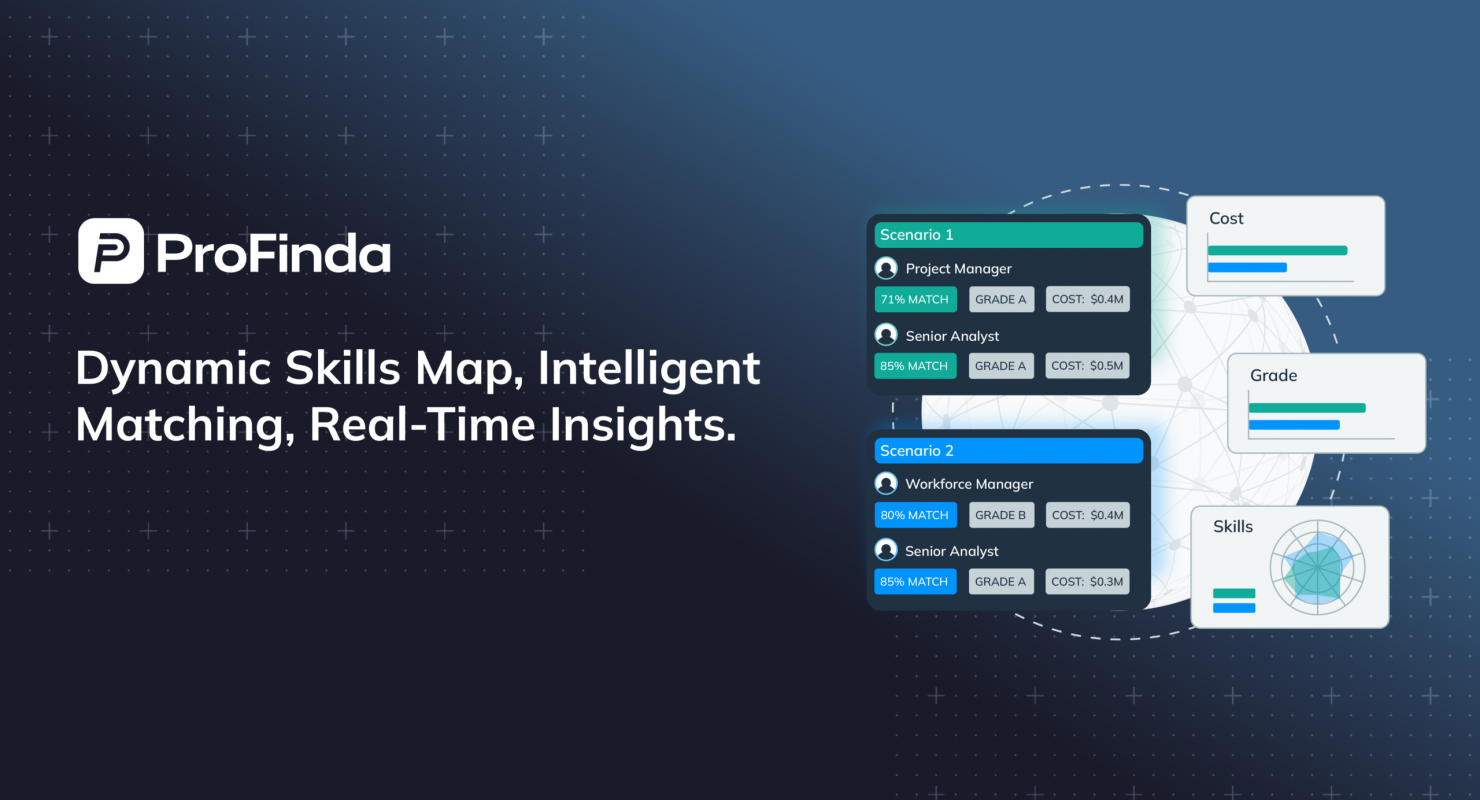
Bench time quietly drains profitability, often worsened by siloed data and managers defaulting to familiar faces. This leads to overspending on contractors, misuse of senior talent, and uneven workloads that push out top performers. Data-driven allocation fixes this with a real-time view across ERP, CRM, and HRIS systems. ProFinda enables it through skills intelligence, reverse matching (finding projects for available people, not just people for projects), and predictive forecasting that catches over- or under-allocation early.

In the professional services sector, one of the most valuable assets is also one of the most perishable: time. Every day a highly skilled consultant spends on the bench waiting for an assignment is not just a missed revenue opportunity, it is a direct hit to the firm’s profitability.
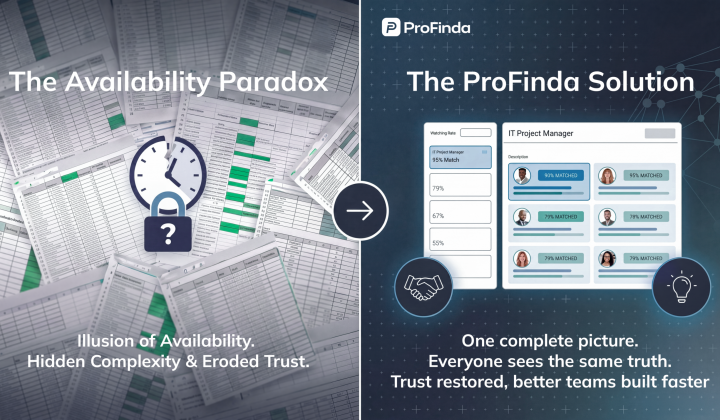
Yet, managing the bench has traditionally been a game of reactive damage control. Resource managers often find themselves digging through disjointed spreadsheets, dealing with siloed data, and navigating organizational biases where project leaders tend to default to booking the same familiar faces.
Rebalancing manual scheduling with data-driven workforce optimization, forward-thinking firms will start to eliminate idle time, distribute work more equitably, and maximise billable hours. By balancing human expertise with predictive intelligence, modern firms are unlocking a competitive advantage that keeps teams engaged and margins healthy.
The Hidden Costs of Traditional Bench Management
Particularly in Professional services, bench time has been treated as an inevitable cost of doing business. But the true cost of an unoptimised bench goes far deeper than unbilled hours. Three common issues arise when the bench isn’t managed.
-
It drains operational budgets, forcing firms to over-rely on high-cost independent contractors when the right internal skills cannot be located quickly enough.
-
Over-qualified senior resources are frequently assigned to lower-tier tasks simply because they are available, inflating project costs and shrinking margins.
-
The inequitable distribution of work creates a dichotomy where some employees remain idle on the bench while others are chronically over-allocated. This imbalance drives away top performers and spikes recruitment costs.
By grounding workforce tracking, resource forecasting, and deployment in data, organizations can overcome these compounding problems.
Redefining the Bench
Legacy resource management solutions often act as rigid databases where managers are required to spend hours updating profiles and hunting down availability.
Intelligent resource planning tools are fundamentally different: they act as a dynamic intelligence layer that sits atop your existing ERP, CRM, and HRIS systems to create a single source of truth.
Instead of waiting for a project to wrap up before finding a consultant’s next move, data-driven allocation allows firms to predict underutilization weeks, or even months, in advance. By tracking real-time capacity and overlaying it against upcoming client proposals, resource managers can spot bench risks early and match consultants to billable work.
Discover More Resources
A decade of resourcing expertise, ready to guide your next step in workforce optimization