

TL;DR
ProFinda recently partnered with People & Culture consultancy team at 100&First, hosted by Google Cloud HQ, to lead an immersive session on team performance. The takeaway was clear: AI and workforce visibility tools are only as effective as the “social capital” of the teams using them. Success isn’t only about the technology; it’s about closing the 20% communication gap, and building psychological safety for teams and individuals to drive real change.

The Human Side of the Machine
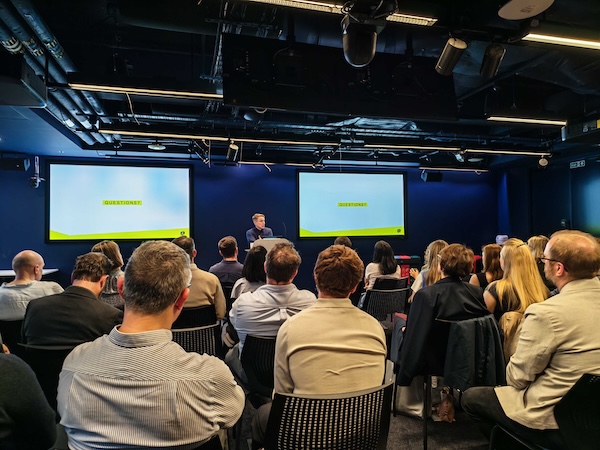
At our most recent event at Google Cloud’s London HQ, the air was thick with talk of “Agentic roadmaps” and “AI automation.” But as the afternoon unfolded, the conversation took a turn away from the technology discussion, and inwards, towards the people in the room. Led by ex Saracens rugby and founder of 100 & First, Will Fraser the room of leaders and resource managers moved beyond the software and into the messy, beautiful reality of human psychology. There was a fascinating keynote discussion, lead by David Jones, A sports psychologist to Liverpool FC Mercedes F1, Saracens Rugby and many more and one attendee captured the sentiment of the conversations perfectly:
“AI Adoption succeeds or fails on human factors. Visibility only helps when people feel safe surfacing confusion early…”
The Curse of Knowledge:
The Curse of Knowledge A central theme of the day was the “Curse of Knowledge”. The psychological bias where, once we know something, we forget what it’s like not to know it. In the context of a fast-moving workforce, this is lethal. Data shows that while we believe 90% of our communication is understood, the reality is often closer to 70%.
A key learning shared in the conversations that followed the workshop captured this:
“That 20% gap is where projects go wrong, teams fracture, and performance suffers.”
At ProFinda, we see this gap every day. The right technology provides visibility, it shows you who has the skills and where the demand is, but it cannot force a team to trust that data or each other. Instead, it acts as the catalyst, creating a shared reality that allows us to focus on our relationship with each other as much as our relationship with the data.
Social Capital: An Important hidden ROI
The event utilized a “sporting lens” to look at performance. In elite sports, metrics are everywhere, but results are driven by how people fit together. One of the most powerful observations of the day was this: “Friction doesn’t come from AI itself, but from low visibility, weak trust, and unclear roles.”
We often skip the very conversations that would make our work easier because we are “too busy” doing the work. We prioritize the “hamster wheel” over the human connection. But as we discussed in the workshop, high social cohesion allows teams to solve problems faster and make fewer errors.
An Augmented Future
AI and human capital are not competing forces; they are complementary. Technology provides the map of visibility, but human trust provides the fuel. As we look toward an “augmented” future, the most important investment a business can make isn’t just in their tech stack, but in the psychological safety of their people.
The biggest takeaways our team took from the fascinating session focused on:
- The "20% Understanding Gap" While leaders often believe their communication is 90% effective. Research suggests the reality of peer-to-peer understanding is closer to 70%.
- The ROI of Social Capital: Teams with high social cohesion and psychological safety solve problems significantly faster and report fewer errors than those driven by metrics alone.
-
Visibility as a Safety Net: AI adoption succeeds when "Visibility" is viewed as a support mechanism rather than a surveillance tool. When workforce tools surface skills and capacity transparently, it reduces the "Curse of Knowledge" by meeting employees where they actually are, rather than where leadership assumes they should be.