
TL;DR
Global ERPs were built to track materials and transactions, not dynamic human skills, so they reduce employees to job titles and cost centers while missing real capabilities. This creates a data decay problem (annual manual updates go stale fast) and leaves systems unable to intelligently match people to projects across skills, availability, margins, and career goals. The fix isn’t replacing the ERP but adding an AI-powered skills intelligence layer, like ProFinda, on top of it. This layer aggregates data across the tech stack, powers smarter matching, and helps firms use their bench more effectively while keeping employees engaged.

In the modern enterprise, achieving peak efficiency serves as a primary guiding principle. For decades, organizations have chased this objective by consolidating their core operational processes into massive, centralized technology stacks. At the heart of this strategy sits the global enterprise resource planning (ERP), the ultimate system of record designed to track, measure, and manage everything from global finances to supply chains.
Yet, if you walk into the resourcing department of many professional services firms, you will notice a bizarre paradox.
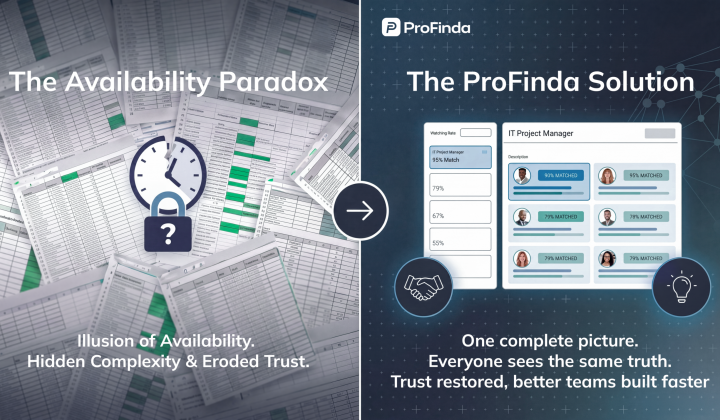
Despite millions of dollars invested in enterprise resource planning systems, resource managers and staffing coordinators are often still running their day-to-day operations using fragmented tools and manual spreadsheets.
This isn’t a failure of discipline; it’s a misalignment of technology. Traditional enterprise resource planning systems aren’t designed to manage the fluid, complex, and skills-first nature of a modern workforce. Here we discuss what may be contributing to why global ERP’s fail organizations’ resourcing strategies and possible fixes that can be deployed.
ERPs Treat People Like Materials, Not Dynamic Talent
At their core, the architectural foundations of enterprise resource planning systems were built for the industrial era to track physical materials, inventory, and ledger transactions. When human capital is forced into this framework, employees are reduced to flat rows in a database.
An ERP typically tracks an employee by a few rigid data points:
-
Job titles that rarely reflect employees’ true, diverse skill sets.
-
Departments and cost-centers; where employees sit and what they cost.
-
Whether employees are booked 100% to a project code.
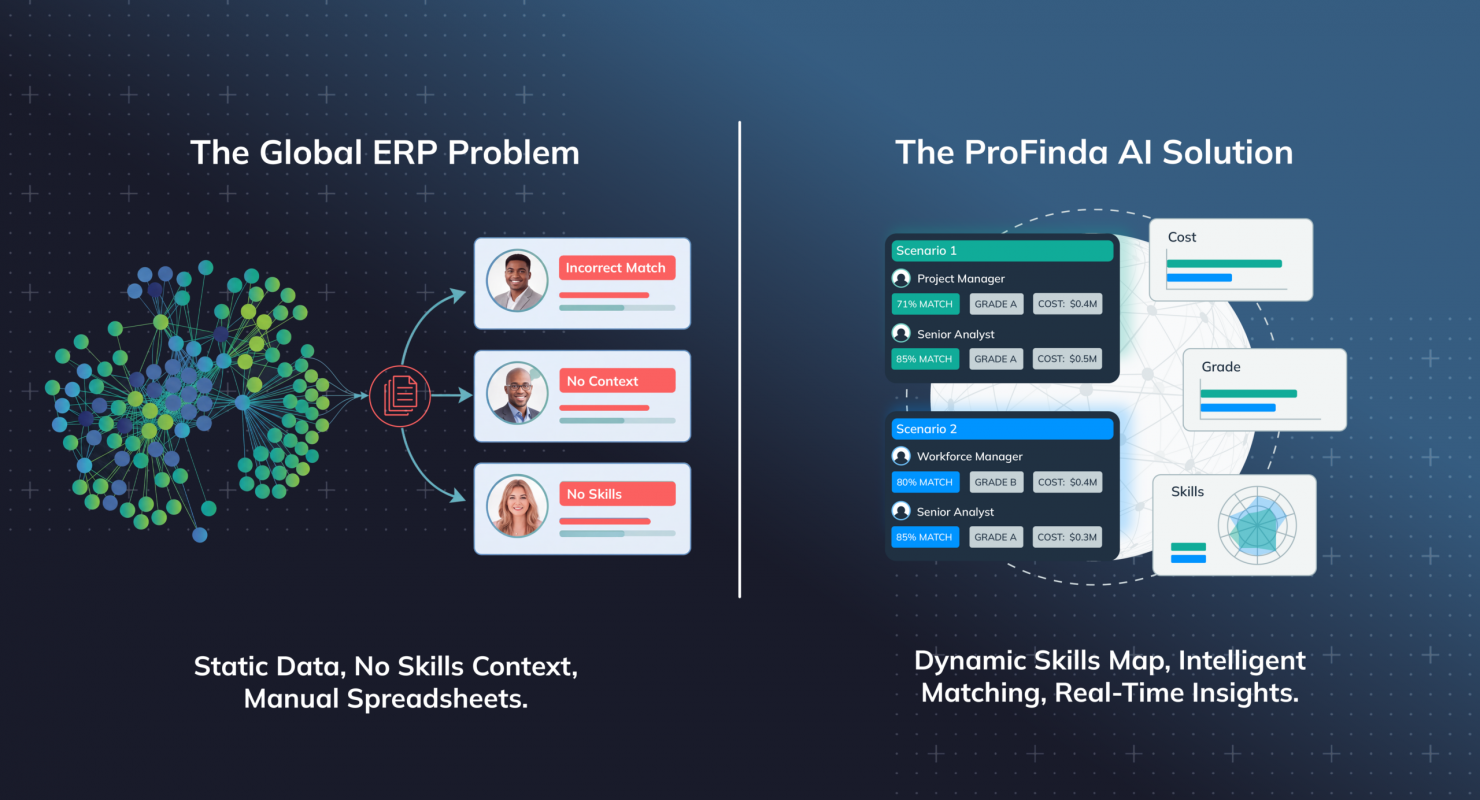
What an ERP completely misses is context. It doesn’t know that an Associate Consultant also has niche experience in a specific regulatory framework, is fluent in a second language, and is highly interested in transition management. In a talent-driven economy, skills grow and change constantly and an ERP is fundamentally blind to this dynamic reality.
The Data Decay Dilemma
For a resourcing strategy to succeed, data should be real-time and accurate. This is where traditional databases fail.
When organizations try to use their ERP or standard HCM systems to track employee skills, they inevitably run into a data decay problem. Standard systems rely on manual, static profiles. Employees are asked to log into a portal once a year and manually update a checklist of hundreds of skills.
This process is tedious and lacks immediate value for the individual therefore adoption is low. The data becomes outdated the moment it is entered. Resource managers, knowing the data is unreliable, default back to relying on personal networks, email threads, and internal politics to staff projects.
The Lack of Intelligent, Multi-Dimensional Matching
Staffing a critical project isn’t a simple binary match of Availability = Yes and Job Title = Consultant. It is a complex optimization puzzle. To staff a high-value project successfully, you must simultaneously balance:
-
Granular technical and soft skills.
-
Industry and client-specific experience.
-
Chargeability rates and project margins.
-
Individual capacity and burnout prevention.
-
Employee career development preferences.
Traditional enterprise resource planning systems simply do not have the algorithmic sophistication to solve this equation. They cannot dynamically weigh these competing factors, meaning firms continue to underutilize their bench, overwork their go-to people, and miss out on project profitability.
The Solution: Elevating Your ERP with ProFinda’s AI-Powered Skills Intelligence
Modernizing your capabilities does not require the removal of your ERP. While it remains vital as the primary transactional system of record, organizations today need an intelligent workforce optimization layer positioned above it.
ProFinda doesn’t replace your existing tech stack; it unlocks its true potential. By integrating seamlessly with your ERP, HCM, and CRM platforms, ProFinda transforms fragmented, static data into a dynamic, real-time map of your organization’s collective intelligence.
Discover More Resourcing
A decade of resourcing expertise, ready to guide your next step in workforce optimization
How ProFinda Transforms Your Resourcing Strategy?
-
ProFinda’s proprietary, AI-driven skills ontology acts as a universal skills standard, automatically aggregating, translating, and enriching employee skills data from across your entire tech stack to build a rich, 360-degree talent profile.
-
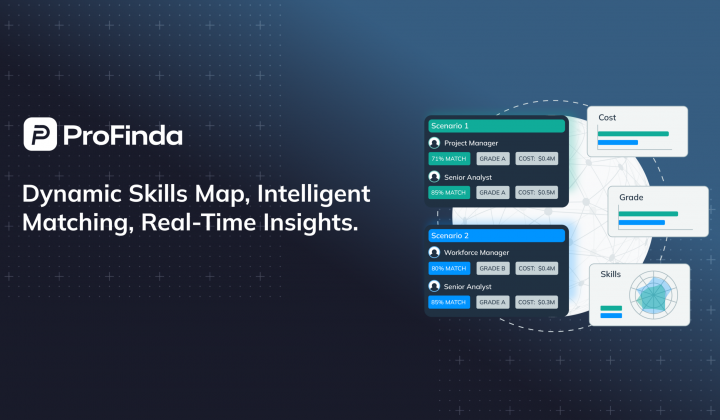
ProFinda’s advanced matching engine goes far beyond simple keyword searches. By evaluating thousands of data points in real time, the platform enables resource managers to identify the ideal team for any project. This ensures a precise balance between resource availability, project profitability, and successful client delivery.
-
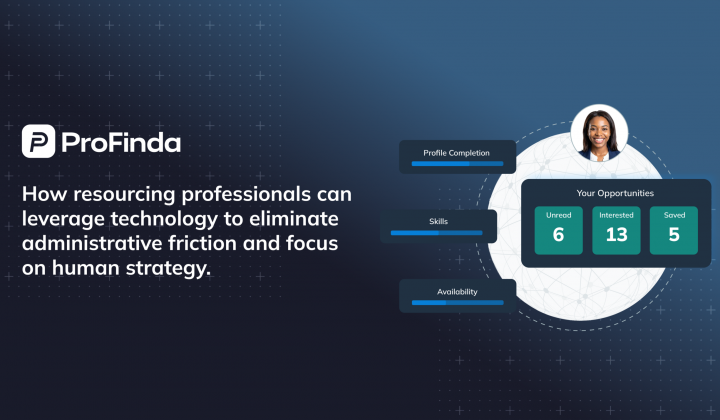
ProFinda boosts employee engagement and retention by aligning project demand with personal career aspirations. Employees gain visibility into stretch roles and opportunities that fit their growth goals, shifting your workforce from a rigid hierarchy into an agile, highly motivated talent ecosystem.