

TL;DR
AI adoption succeeds on trust, not tooling. At our latest networking breakfast, leaders from professional services, workforce transformation, and media shared how permission-based experimentation, not top-down mandates, drove one firm to 89% daily adoption. We also explored the shift from time-based to value-based pricing, the unsolved challenge of training junior talent as AI absorbs entry-level work, and why AI is recomposing roles rather than deleting them.

The latest installment of our networking series saw us bring together leaders from professional services, workforce transformation, broadcasting and media, for a candid conversation over plates stacked with breakfast treats. It wasn’t a polished sales pitch or a series of dry slide decks; it was a candid discussion about what we’ve all seen happen when human capital meets artificial intelligence, and the hopes and fears for what we think comes next.
While the conversations covered everything from pricing models to organizational design, they all returned to a singular, foundational truth: artificial intelligence is as much a human opportunity as it is a technological one.
1. Trust Before Technology: The True Infrastructure of Adoption
We started the morning by going back to basics. Before anyone mentioned algorithms, LLMs, or software rollouts, the room turned to Patrick Lencioni’s classic framework: The Five Dysfunctions of a Team. Led from insights shared by David Millar, a Men’s Coach to elite performers, executives and high-profile talent.
We discussed how the absolute foundation of Lencioni’s pyramid is trust. Without vulnerability-based trust, teams cannot engage in healthy conflict, commit to decisions, or hold one another accountable.
The exact same logic applies to AI. A business can purchase the most sophisticated system in the world, but if employees do not trust the company’s intentions, they will not engage honestly. They won’t experiment, they won’t feel safe enough to admit mistakes, and they certainly won’t flag what isn’t working.
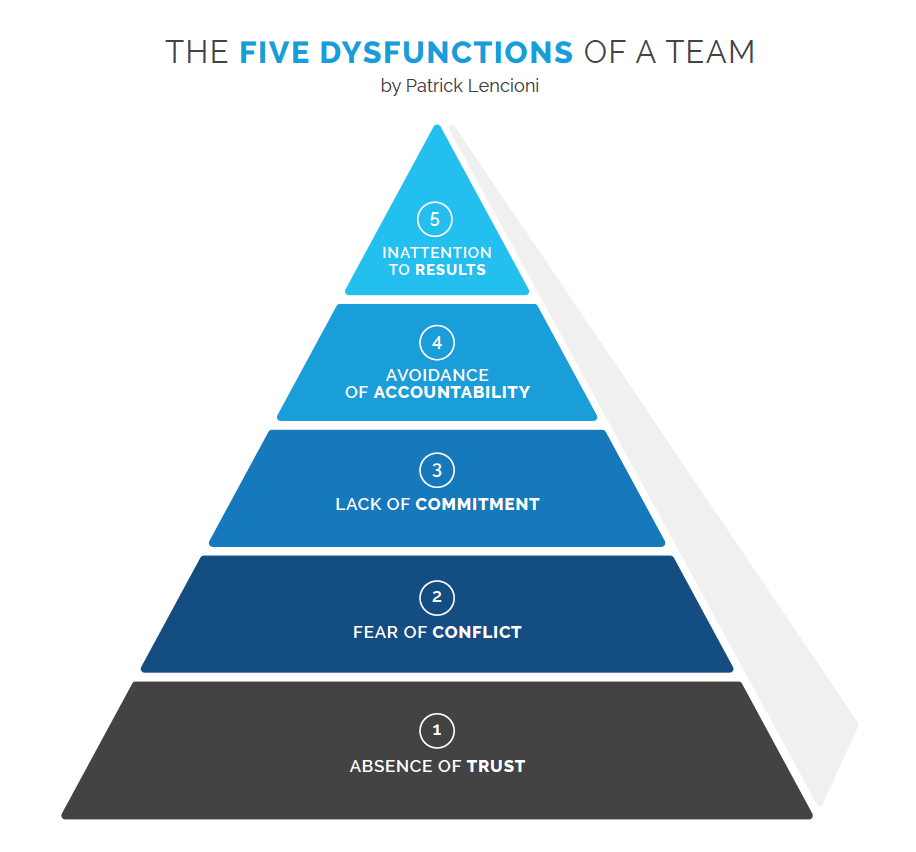
2. An 89% Adoption Case Study: Why the Best Rollouts Feel Like Permission, Not Policy
One of the most significant drivers of engagement is autonomy. When employees are constantly assigned tasks with little input, it can lead to feelings of disempowerment and monotony.
Explore “marketplace” models or skills-based routing.
-
Skill-Matching Platforms: Modern RM platforms can match available projects with employee skills and, crucially, give visibility to interests and development goals of the workforce. Allowing employees to “bid” or express interest in projects that align with their career aspirations.
-
Balancing Portfolios: Work with employees to craft a balanced project portfolio that includes challenging, growth-oriented tasks alongside more routine work ensuring variety and continuous learning.
-
Work with your workforce members: When employees can have a say in their schedule, they feel heard, valued and are far more likely to be engaged and committed to the project’s success. A study by the Corporate Executive Board found that employees with high levels of control over their work are twice as likely to be engaged.
Top-Down Mandates
(The Old Way)
Permission-Based Adoption (The New Way)
Handing down strict, pre-approved policies from day one.
Giving practitioners the freedom to play, experiment, and find the value first.
Forcing users into rigid, unfamiliar workflows.
Letting successful use-cases bubble up organically, then formalizing them.
High resistance, surface-level compliance.
High engagement, genuine value creation, and safer self-regulation.
When employees are trusted to lead the application of AI within safe guardrails, they take ownership of the shift. Guardrails are vital to prevent costly errors, but they are far easier to implement once people have already discovered how the tool makes their work better.
3. The Commercial Ripple Effects: Moving from Hours to Value
As AI compresses the time it takes to complete complex tasks, it is forcing a massive reckoning in how businesses charge for their expertise.
For decades, professional services have relied on time-based billing. But if AI allows an experienced consultant to draft a complex report in minutes instead of days, the traditional pricing model collapses. Clients who know how fast the work is now being done will rightfully refuse to pay for bloated hours.
The direction of travel is irreversible: the industry is shifting from time-based billing to value-based pricing. Leaders are having to redefine what their clients are actually paying for. The premium is no longer the raw time spent “doing”; it is the judgment, relationship, and specialized strategic insight applied to the output.

4. The Junior Talent Pipeline: The Open Question Nobody Has Solved
As the table became more comfortable and candid, we hit upon the most pressing concern of the morning, one that had no easy answers.
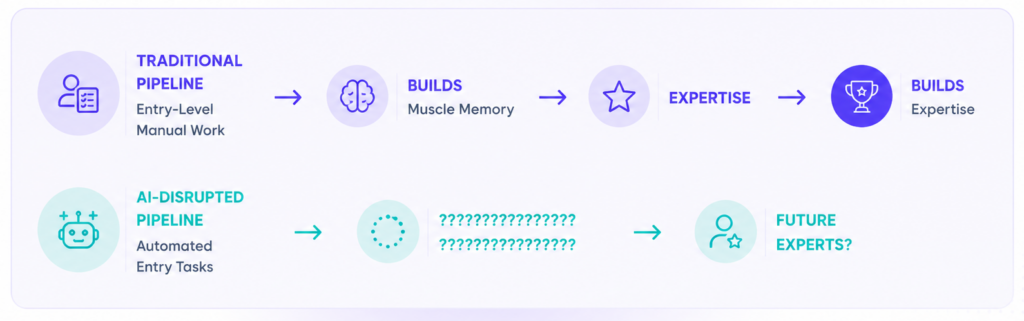
If AI instantly handles all the repetitive, entry-level tasks, how do we train the next generation of leaders?
Historically, junior staff learned their craft by doing the “heavy lifting”:
Writing the first drafts of proposals.
Pulling, sorting, and cleaning data.
Conducting basic background research.
These tasks were a rite of passage. They built the foundational muscle memory that eventually turned juniors into seasoned partners. If AI automates those tasks out of existence, we run the risk of hollowing out our talent pipelines.